

Views: 268 Author: Dongguan Color Can Publish Time: 2026-11-11 Origin: Dongguan Color Can


Content Menu
● Tinplate vs Aluminum: Understanding the Materials
>> What Is Tinplate Packaging?
>> What Is Aluminum Packaging?
● Custom Tinplate vs Aluminum Packaging: A Practical Comparison
● When Tinplate Is the Better Starting Point
>> Decorative Packaging and Brand Presentation
>> Projects Where Shape Retention Matters
● When Aluminum May Be the Better Choice
>> Weight-Sensitive Packaging Projects
>> Designs Suited to Aluminum Forming
● Product Compatibility: The Coating Can Matter More Than the Metal
>> Define the Contents Before Selecting the Coating
>> Distinguish Decorative Tins from Hermetically Sealed Cans
● Compare Total Packaging Cost, Not Just Unit Price
● A Five-Step Material Selection and Validation Plan
>> 1. Write a Complete Packaging Brief
>> 2. Review Existing Formats Before Commissioning Tooling
>> 3. Compare Representative Samples
>> 4. Test with the Actual Product
>> 5. Approve a Written Production Standard
● Sustainability: Ask Better Questions Than "Which Metal Is Greener?"
● Why Start with Dongguan Color Can Making Technology Co., Ltd?
>> Is Tinplate Better Than Aluminum for Custom Metal Packaging?
>> Does Tinplate Packaging Rust?
>> Is Aluminum Packaging Automatically Food-Safe?
>> Which Material Is Cheaper for Custom Packaging?
>> Are Decorative Metal Tins Airtight?
>> Can Both Materials Be Recycled?
● Turn Your Packaging Brief into a Practical Proposal
At Dongguan Color Can Making Technology Co., Ltd, we believe packaging should protect your product, express your brand, and make commercial sense. When customers ask, "Tinplate vs Aluminum: Which Is Better for Custom Metal Packaging?", our starting point is the product—not a predetermined material preference.
Founded in 2006 and expanded in 2012, our company brings together product research and development, design, production, sales, and service. Our commitments are straightforward: integrity, reliable delivery, consistent quality, continuous improvement, and responsive after-sales support.
Tinplate is often a strong starting point for decorative tins, gift packaging, and reusable containers where rigidity and presentation matter. Aluminum deserves consideration when reducing package weight is a major priority.
Neither material wins every application. The right choice depends on the complete package: its contents, construction, coating, closure, distribution environment, and production economics.

Tinplate is steel sheet coated with a thin layer of tin. The steel provides the structural foundation, while the tin coating contributes surface protection. Depending on the application, additional internal and external coatings help protect the metal and support decoration.
Tinplate is not solid tin. That distinction matters when discussing strength, material specifications, and recycling.
For custom packaging, buyers should evaluate the complete specification, including steel thickness, temper, tin coating, protective lacquer, and forming quality.
Aluminum packaging uses aluminum or aluminum alloys formed into containers and components. Its low density makes it attractive where package weight affects handling or logistics.
Aluminum naturally forms an oxide layer that offers surface protection. However, this does not make every aluminum container suitable for every product.
Acidic, salty, or otherwise reactive contents can still require a carefully selected internal coating and compatibility testing.
| Decision factor | Tinplate packaging | Aluminum packaging |
|---|---|---|
| Weight | Generally heavier for comparable dimensions and thickness | Lower density; finished weight depends on construction |
| Rigidity | Often useful for rigid decorative containers | Performance depends on alloy, thickness, and geometry |
| Branding | Supports printed and embossed decorative formats | Supports multiple decorative finishes, depending on process |
| Corrosion protection | Depends on tin coating, lacquer, construction, and exposure | Depends on alloy, oxide layer, coating, and exposure |
| Food contact | Requires application-appropriate materials and documentation | Requires application-appropriate materials and documentation |
| Cost | Must be assessed against the actual design and order | Must be assessed against the actual design and order |
| Recycling | Uses established steel recycling routes where available | Uses established aluminum recycling routes where available |
Treat this table as a screening tool, not a purchasing specification. A well-designed package in either material can outperform a poorly specified alternative.
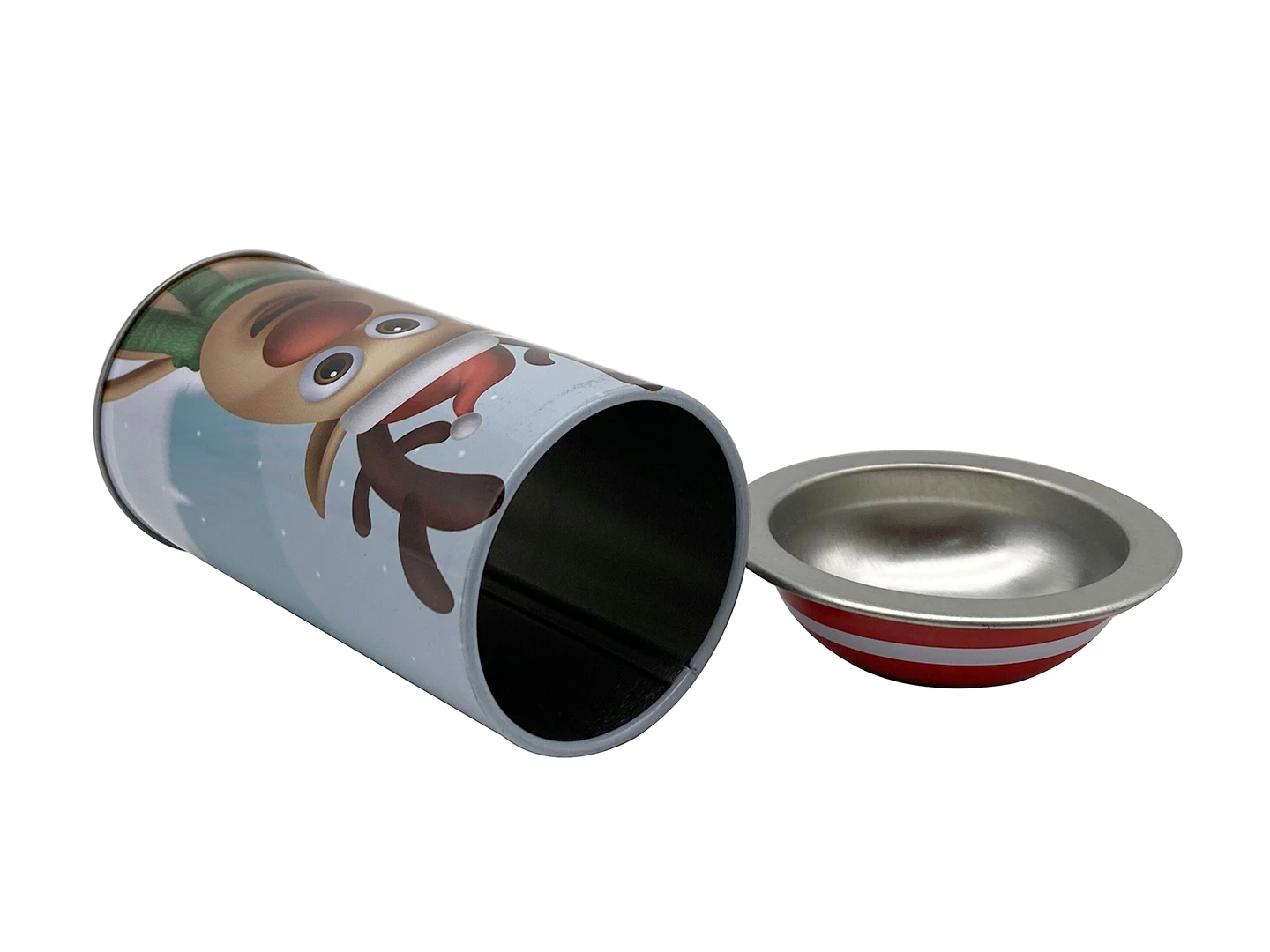
For tea, biscuits, confectionery, gifts, and collectible packaging, tinplate is worth evaluating when a rigid, reusable presentation is central to the brief.
The objective is not simply to make a container look expensive. It is to create a package that opens comfortably, protects its contents, and presents the artwork consistently.
Consider these design questions:
- Does the lid align cleanly with the printed body?
- Can the customer open and close the package comfortably?
- Will embossed details remain clear after forming?
- Are edges and internal surfaces appropriate for the intended use?
- Does the container fit its retail shelf and shipping carton?
Our approach at Dongguan Color Can Making Technology Co., Ltd is to connect these decisions early, rather than treating decoration as a final step.
Tinplate's steel substrate can support rigid packaging designs. This makes it a useful candidate when stacking, repeated handling, or maintaining a crisp presentation matters.
However, "steel is stronger" is not a sufficient specification. Finished performance also depends on panel dimensions, material thickness, rolled edges, reinforcing features, and closure design.
The practical question is whether the finished container passes the agreed handling and stacking tests.
Aluminum deserves serious consideration when reducing package mass has measurable value.
For example, a business shipping large quantities may benefit from a lighter container. But the comparison should use actual finished-package weights—not the density of the raw metals alone.
A lighter container may still need protective inserts or different outer cartons. Those changes can affect both shipment weight and cost.
Ask suppliers to compare:
1. Empty-container weight.
2. Filled retail-unit weight.
3. Units per shipping carton.
4. Packed carton weight.
5. Pallet configuration and freight charges.
This turns a general lightweighting claim into a useful commercial calculation.
Some container formats and manufacturing routes are particularly well suited to aluminum. The important issue is whether the proposed supplier can consistently produce the required geometry, finish, and closure.
Do not assume that a tinplate design can be transferred directly to aluminum without adjustment.
Material substitution may require changes to wall thickness, tooling, tolerances, and handling protection.
A visually attractive container can still be unsuitable for its contents.
For food-contact applications, both tinplate and aluminum may need internal coatings to separate the product from the metal. Selection depends on product chemistry, processing conditions, storage, and intended shelf life.
Provide the packaging supplier with a clear product profile:
- Whether contents are dry, oily, acidic, salty, or moisture-sensitive.
- Whether the product directly touches the metal.
- Filling temperature and any subsequent heat treatment.
- Expected shelf life and storage conditions.
- Destination market and applicable food-contact requirements.
Avoid accepting a generic "food-grade" statement as complete evidence. Documentation should identify the relevant materials, intended conditions of use, and applicable regulatory basis.
A decorative slip-lid tin is not automatically airtight, leakproof, or suitable for thermal processing.
Both metals can provide strong barriers through an intact metal wall. However, actual package protection also depends on seams, closures, openings, and any internal liner or pouch.
For aroma-sensitive tea or moisture-sensitive confectionery, an internal barrier pack may be part of the solution.
If your product requires a validated hermetic seal, specify that requirement before discussing artwork.
One of the most useful lessons in packaging procurement is that the lowest quotation does not necessarily produce the lowest delivered cost.
For custom tinplate packaging and custom aluminum packaging, compare total landed cost using equivalent requirements.
Include:
- Container unit price.
- Tooling and development charges.
- Printing, coatings, and decorative finishes.
- Inserts, liners, and protective wrapping.
- Cartons, pallets, and freight.
- Inspection, damage, and rework allowances.
- Inventory commitments and reorder quantities.
For example, a lighter container might reduce freight but require additional transit protection. A different design might cost more per unit yet fit more efficiently into shipping cartons.
These are comparison scenarios, not guaranteed outcomes. Ask for a cost model based on your actual dimensions, quantity, shipping route, and protection requirements.
At our company, integrity means helping customers define a comparable brief rather than relying on an attractive but incomplete headline price.
Document product dimensions, fill weight, direct-contact requirements, artwork, closure expectations, target markets, and delivery schedule.
Separate essential requirements from preferences. This prevents a decorative feature from accidentally overriding a product-protection requirement.
Ask whether an existing format can satisfy the brief.
A suitable existing design may reduce development work. A fully customized shape may be justified when its branding or functional benefits outweigh the additional complexity.
Confirm availability rather than assuming an existing format is suitable.
Evaluate samples using a written checklist.
Check dimensions, lid fit, edge finish, print alignment, coating coverage, and visible deformation. Where possible, assess production-representative samples rather than relying entirely on visual mockups.
Use the intended contents and realistic storage conditions.
Depending on the application, evaluation may include odor or flavor changes, corrosion, coating performance, closure function, and transport damage.
Any accelerated test should have a justified relationship to the intended use. It should not automatically replace the necessary shelf-life assessment.
Agree on material specifications, artwork, acceptable variation, inspection criteria, packaging method, and sample approval.
Retain an approved reference sample and define how changes will be reviewed.
This is how a broad promise of quality becomes a repeatable purchasing standard.
Both steel and aluminum can be recycled repeatedly while retaining their inherent material properties. However, recyclability does not mean that every package is collected, sorted, and recycled.
Recycling also involves material losses. Avoid interpreting "infinitely recyclable" as a claim of zero loss or guaranteed circularity.
A credible environmental comparison should consider:
- Finished-package material weight.
- Verified recycled content.
- Manufacturing and decoration processes.
- Transport distance and shipping configuration.
- Local collection and recycling infrastructure.
- Additional components and ease of separation.
Do not apply a beverage-can recycling rate to every decorative aluminum container. Likewise, steel packaging figures from one region do not describe every destination market.
For marketing, specific statements are more useful than broad claims. "Designed for reuse" should describe an intentional feature; it should not imply that customers will necessarily reuse the package.
Our company combines research and development, design, production, sales, and service within one business.
Since our founding in 2006 and expansion in 2012, our stated priorities have remained consistent: dependable cooperation, respect for delivery commitments, attention to quality, and continuous improvement.
We also value the people behind the product, creating opportunities for team members to contribute and grow.
For customers, our commitment is to provide high-quality, high-value tinplate packaging with responsive after-sales support. We believe that commitment should be expressed through clear specifications, practical communication, and agreed production expectations—not unsupported superlatives.
Tinplate is often worth considering for rigid decorative packaging. Aluminum deserves consideration when weight reduction is important. The better option depends on the complete design, product compatibility, closure, and delivered cost.
It can corrode if its protective system is damaged or unsuitable for the environment. Appropriate coatings, construction, storage, and handling help manage the risk. Validate performance under the expected conditions.
No. Food-contact suitability depends on the complete package, including alloy, coatings, intended contents, and use conditions. Request application-specific documentation rather than relying on the material name alone.
There is no universal winner. Dimensions, thickness, tooling, decoration, order quantity, freight, and protection requirements all affect cost. Compare quotations against the same written specification.
Not necessarily. A close-fitting lid does not prove airtightness. If oxygen, moisture, or aroma protection is critical, specify measurable barrier and closure requirements and verify the proposed packaging system.
Yes, both have recycling routes, but local acceptance and actual recovery vary. Review the complete package, including liners and attachments, and provide disposal instructions appropriate to the destination market.
Send Dongguan Color Can Making Technology Co., Ltd your product type, dimensions, target quantity, artwork requirements, destination market, and delivery timeline.
Ask us to discuss a tinplate packaging proposal covering structure, decoration, product-contact needs, sampling, and quality expectations. If aluminum is also under consideration, use the same brief to compare alternatives fairly.
The goal is not to choose a metal by reputation. It is to choose packaging that works for your product and your business.
1. U.S. Food and Drug Administration — "Food Packaging & Other Substances that Come in Contact with Food: Information for Consumers."
2. Food Packaging Forum — "Can Coatings," updated September 15, 2025.
3. PPG — "Food Packaging."
4. Metal Packaging Europe — "A Permanent Material."
5. Can Manufacturers Institute and contributing metal-packaging organizations — "Metal Can Sustainability & Recycling Fact Sheet — 2026."
Hot Tags: China, Global, OEM, private label, manufacturers, factory, suppliers, manufacturing company


