

Views: 277 Author: Dongguan Color Can Publish Time: 2026-11-17 Origin: Site


Content Menu
● Custom Cookie Tins from Dongguan Color Can Making Technology
● Why Choose Custom Cookie Tins for Your Brand?
>> Create a Recognizable Brand Experience
>> Design Protection Around the Cookies
● Start with the Cookies Before Choosing the Tin
>> Check Usable Internal Dimensions
● Custom Cookie Tin Design: Shape, Printing, and Structure
>> Existing Molds or New Tooling?
>> Approve Physical Appearance, Not Just Screen Colors
● Food-Contact Safety: Verify the Complete Packaging System
>> Use Certification Language Precisely
● Freshness and Shelf Life: Do Not Rely on the Tin Alone
● Compare Total Packaging Cost, Not Just Unit Price
>> Questions That Make Quotations Comparable
● A Practical Seven-Step Custom Cookie Tin Ordering Process
>> 1. Define the Commercial Brief
>> 2. Supply Product Measurements
>> 3. Select the Structural Route
>> 4. Confirm Materials and Compliance Needs
>> 5. Develop Artwork and Samples
>> 6. Approve a Written Production Standard
>> 7. Inspect and Plan Delivery
● Quality Checks That Make Acceptance More Objective
● Reusability Without Unsupported Environmental Claims
● Request a Custom Cookie Tin Proposal
● Frequently Asked Questions About Custom Cookie Tins
>> What is the minimum order quantity for custom cookie tins?
>> Can cookies go directly into a tin?
>> Are custom cookie tins airtight?
>> Can you manufacture custom cookie tins with a logo?
>> How long does production take?
>> What should I send to receive an accurate quotation?
At Dongguan Color Can Making Technology Co., Ltd., we develop custom cookie tins around a practical question: how should your packaging protect the cookies, represent your brand, and work on your production line?
With 14 years of experience in metal packaging, we combine original design, research and development, customized manufacturing, global sales, and dedicated after-sales support. Our work covers cookie tins, candy tin boxes, candle tins, and premium gift packaging.
This guide explains how we approach custom cookie tin packaging—and what buyers should confirm before approving an order.
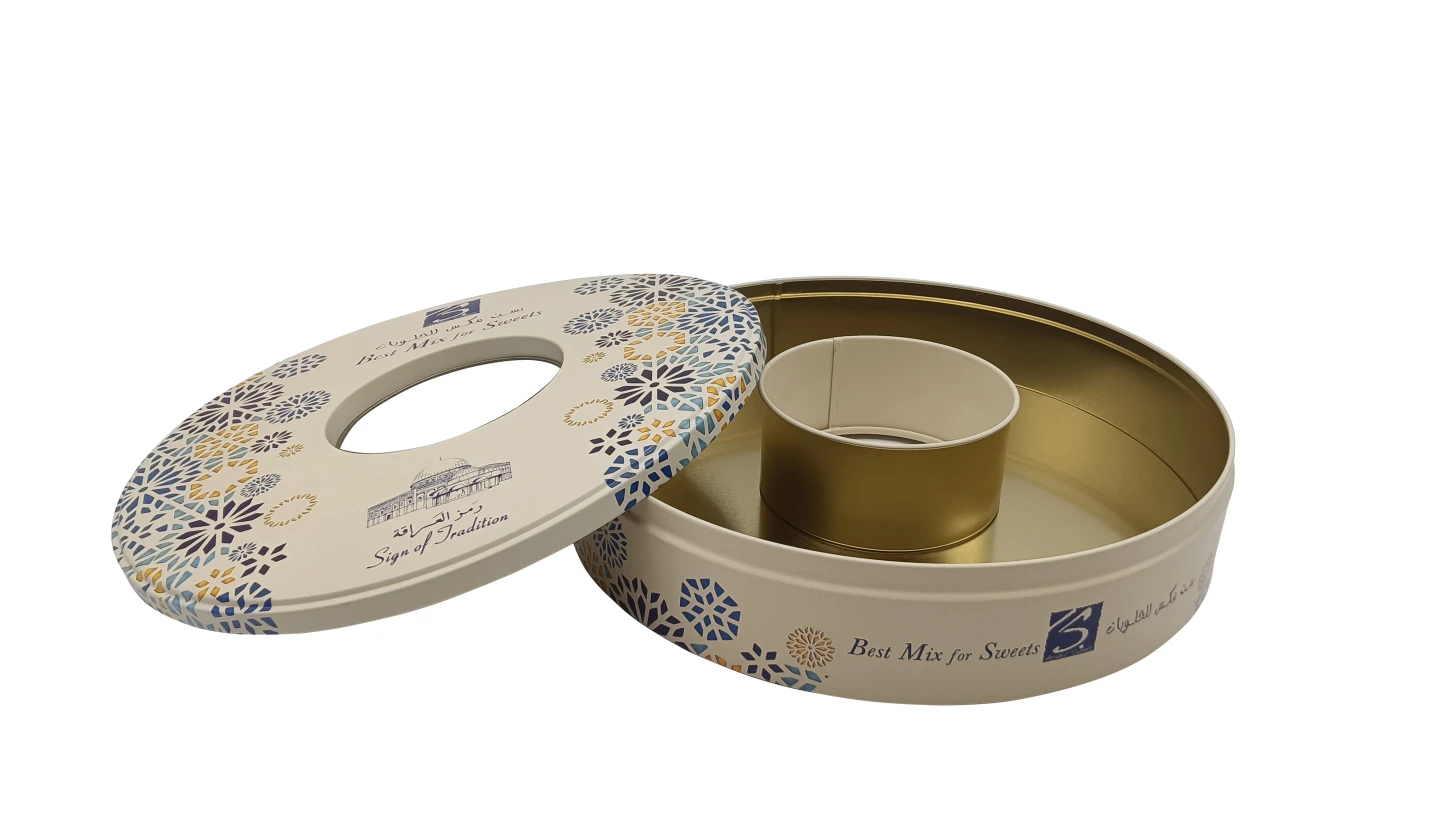
According to our current company information, our manufacturing capabilities include:
- A 10,000-square-meter factory.
- More than 50 production machines, including cutting, punching, forming, and oven equipment.
- Over 1,000 existing tin box molds.
- Annual production exceeding 30 million tins.
- OEM and ODM support for structural design, artwork, dimensions, and accessories.
Our packaging serves food, confectionery, tea, coffee, cosmetics, healthcare, and gift markets. We supply customers across Europe, North America, Japan, the Middle East, and other international markets.
For cookie brands, this means the conversation can begin with an existing mold or a new packaging concept. Neither route is automatically better. The right choice depends on your product, budget, quantity, and launch schedule.
Custom cookie tins can combine product presentation, structural protection, and a reusable container in one package. Their value, however, depends on how carefully those functions are specified.
Shape, color, surface finish, and opening style influence how customers encounter your product.
A restrained embossed logo may suit a premium shortbread collection. A colorful illustrated lid may work better for a seasonal assortment. Corporate gifting may require space for both the bakery's identity and the recipient company's branding.
The objective is not simply decoration. It is a package that communicates the right product and occasion.
The tin is only one part of the packaging system.
Fragile cookies may need trays, dividers, or individual wrapping. Assorted products may need separate compartments. A snug lid should not automatically be described as airtight or hermetically sealed.
Our recommendation is to evaluate the filled package, not just the empty container.
One common purchasing mistake is selecting external dimensions before confirming the actual cookie arrangement.
Begin with:
1. Maximum cookie diameter, width, and thickness.
2. Variation between production batches.
3. Number of cookies per layer and per package.
4. Weight and dimensions of any inner wrapping.
5. Required trays, pads, or dividers.
6. Space needed for comfortable removal.
A package that fits one carefully arranged sample may not accommodate normal production variation.
External measurements do not show the complete usable space. Rolled edges, rounded corners, lid geometry, and inserts can affect the fit.
For custom biscuit tins, approve internal dimensions against physical products whenever possible. Include representative cookies from normal production rather than relying only on drawings.
*[Suggested visual: A labeled cross-section comparing external dimensions, usable internal space, insert thickness, and product clearance.]*
The strongest design brings appearance and manufacturing requirements together early.
| Design decision | Practical benefit | What to confirm |
|---|---|---|
| Round tin | Familiar presentation for stacked cookies | Cookie diameter and removal space |
| Rectangular tin | Organized rows or compartments | Corner clearance and tray fit |
| Hinged lid | Attached opening experience | Hinge operation and packing workflow |
| Slip lid | Simple, removable closure | Fit, retention, and opening force |
| Embossed logo | Raised visual and tactile detail | Tooling, location, and artwork limits |
| Printed finish | Brand colors and illustration | Physical color standard and scuff resistance |
An existing mold may reduce tooling requirements and simplify development. New tooling offers greater freedom when a distinctive size or shape has commercial value.
Before commissioning a new structure, we recommend checking whether an existing format can achieve the same result through artwork, embossing, or a redesigned insert.
Digital artwork is essential, but it cannot fully represent printed metal, varnish, texture, or metallic effects.
Agree on the approval method before production. Depending on the project, this may involve color references, printed samples, or a signed physical sample.
"Food-grade tinplate" is a starting point, not a complete compliance assessment.
The suitability of a finished package depends on its materials, coatings, construction, intended food, contact duration, and storage conditions.
Butter-rich cookies, chocolate coatings, and dry biscuits may require different considerations. Direct contact and individually wrapped products also create different packaging conditions.
For the selected specification, ask for:
- Material and internal-coating information.
- Relevant food-contact compliance documentation.
- Test reports identifying the tested sample.
- The food types and conditions covered.
- Confirmation that supplied materials match approved specifications.
- Traceability information for production batches.
Our company reports SGS and CTT testing, ISO certification, Sedex auditing, and patent holdings. Buyers should review the current documents and their scope rather than relying on a list of logos.
For the United States, the regulatory basis of relevant food-contact substances matters more than a broad "FDA-certified tin" statement.
For the European Union, applicable food-contact requirements must be assessed for the intended package and use. Other destination markets require their own review.
Similarly, ethical audits and management-system certificates serve different purposes. They do not replace product-specific food-contact evidence.
A decorative tin should not automatically be treated as a validated moisture or oxygen barrier.
Before making freshness claims, define what the packaging must control:
- Moisture-related texture changes.
- Exposure affecting flavor or aroma.
- Odor transfer.
- Grease interaction with contact surfaces.
- Physical damage during handling.
Where necessary, use an appropriate inner package alongside the tin.
Then validate the complete arrangement with the actual cookies under relevant storage conditions. A shelf-life statement should come from suitable product testing, not from the appearance or tightness of the lid.
For wholesale custom cookie tins, the lowest quoted price may not represent the lowest overall cost.
A useful comparison includes:
Total project cost = tins + tooling + sampling + inserts + testing + freight + duties + handling + expected losses.
Compare quotations on the same basis. A lower price may reflect a different specification, excluded accessories, or a different delivery arrangement.
Ask each supplier to clarify:
- Material specification and dimensions.
- Printing coverage and finish.
- Tooling ownership and storage terms.
- Included samples and approval stages.
- Insert and individual-packing costs.
- Quantity tolerances and inspection arrangements.
- Shipping terms and carton specifications.
Request minimum order quantity and lead time for your actual design. Avoid treating a generic website figure as a commitment for every structure or finish.
Share your target market, sales channel, quantity, budget range, launch date, and intended retail presentation.
Provide cookie dimensions, fill weight, arrangement, and inner-packaging details. Physical samples can help resolve uncertainty.
Compare existing molds with custom tooling. Evaluate product fit, differentiation, and development requirements.
Identify the destination market and food-contact conditions before locking the specification.
Review printing areas, seams, lid orientation, embossing, mandatory labeling, and barcode placement where applicable.
Document dimensions, appearance criteria, lid fit, packing method, and agreed inspection requirements. Retain an approved reference sample.
Confirm inspection timing, carton markings, shipping responsibilities, and the process for reporting discrepancies.
"Premium quality" is difficult to inspect unless it becomes a clear acceptance standard.
Before production, agree on checks such as:
- Dimensions against approved tolerances.
- Sharp edges, burrs, or malformed components.
- Lid opening, closing, and retention.
- Print alignment and appearance against the approved sample.
- Scratches, dents, contamination, and abnormal odor.
- Insert fit and filled-package performance.
- Carton protection and shipment identification.
For fragile cookies, consider a transport trial using the filled package. Assess both the tin and the cookies after testing.
Also define the after-sales reporting process: what photographs, batch details, quantities, and inspection records are needed to investigate a concern?
A reusable tin can become a storage container after the cookies are consumed. Design choices can support that possibility.
An easy-opening lid, durable decoration, and a versatile shape may encourage continued use.
However, "reusable," "recyclable," and "environmentally better" are not interchangeable claims. Avoid unsupported statements such as "zero impact" or "100% eco-friendly."
Use specific language about the material and intended reuse, and check disposal guidance for the market where the packaging will be sold.
At Dongguan Color Can Making Technology Co., Ltd., we support both OEM projects with established specifications and ODM projects requiring design development.
Send us your cookie dimensions, target quantity, destination market, artwork status, preferred structure, and required delivery date.
Request a proposal comparing a suitable existing mold with a custom-designed option, including sampling, compliance documentation, inspection, and packing requirements.
MOQ depends on the structure, dimensions, printing, finish, and production setup. Request a quotation for your exact specification, and ask whether an existing mold offers a more practical starting point.
Direct contact requires a package suitable for the particular food and intended conditions. Review the interior coating and relevant documentation. Inner wrapping may still be needed for hygiene, presentation, or freshness.
Not automatically. Lid tightness alone does not establish airtight performance. If barrier performance matters, define measurable requirements and validate the closure or inner-packaging system.
Yes. Our OEM and ODM services support branded artwork and customized packaging development. Confirm printing, embossing, finish, and placement options during the design stage.
Timing depends on tooling, sample approval, material availability, order quantity, and production scheduling. Request separate milestones for development, approval, manufacturing, inspection, and shipping.
Provide dimensions, quantity, cookie arrangement, artwork, finish preferences, destination, inner-packaging needs, and delivery expectations. State whether dimensions are internal or external to avoid confusion.
1. Google Search Central — *Creating helpful, reliable, people-first content*
2. U.S. FDA — *Food Packaging & Other Substances that Come in Contact with Food*
3. U.S. FDA — *Determining the Regulatory Status of Components of a Food Contact Material*
4. U.S. FDA — *Food Types & Conditions of Use for Food Contact Substances*
5. European Commission — *Food Contact Materials*
6. Eurofins — *Eight FAQs for New SMETA Audit Booking*
7. Dongguan Color Can Making Technology Co., Ltd.


