

Views: 255 Author: Dongguan Color Can Publish Time: 2026-11-24 Origin: Site


Content Menu
● Custom Candle Tins vs Stock Candle Tins: The Essential Differences
● Why We Start with Existing Molds Before Recommending New Tooling
● Calculate Total Landed Cost, Not Just the Tin Price
>> Include the Work That Happens After Delivery
>> Include Inventory and Cash-Flow Costs
● A Practical Break-Even Example for Custom Candle Tins
● When Stock Candle Tins Are More Cost-Effective
>> You Are Testing a New Candle Collection
>> You Have Many Low-Volume Fragrances
● When Custom Candle Tins Can Offer Better Value
>> Your Core Products Have Predictable Repeat Demand
>> Integrated Decoration Reduces Recurring Work
>> Packaging Supports a Defined Commercial Goal
● The Hybrid Strategy: A Standard Structure with Custom Branding
● Candle Tin Safety: A Cost Factor You Should Not Skip
>> Validate the Finished Candle System
>> Verify Compliance Claims Precisely
● How to Request Comparable Candle Tin Quotations
● Our Recommendation: Match the Packaging to Your Sales Stage
>> 1. Are custom candle tins always more expensive?
>> 2. What is the minimum order quantity for custom candle tins?
>> 3. Can I customize candle tins without paying for a new mold?
>> 4. Are food-grade tins automatically safe for candles?
>> 5. Should every fragrance have a different printed tin?
>> 6. How can I reduce candle packaging costs without weakening quality?
At Dongguan Color Can Making Technology Co., Ltd., we approach custom candle tins vs stock candle tins with one practical question: which option gives your business the lowest total cost without compromising product performance or tying up unnecessary cash?
Stock candle tins generally make more financial sense for small launches, uncertain demand, and fast replenishment. Custom candle tins can become more cost-effective when repeat orders spread development costs across larger volumes and integrated decoration replaces recurring labeling work.
With 14 years of metal packaging manufacturing experience, we help buyers evaluate both options. The right decision depends on more than the price printed on a quotation.

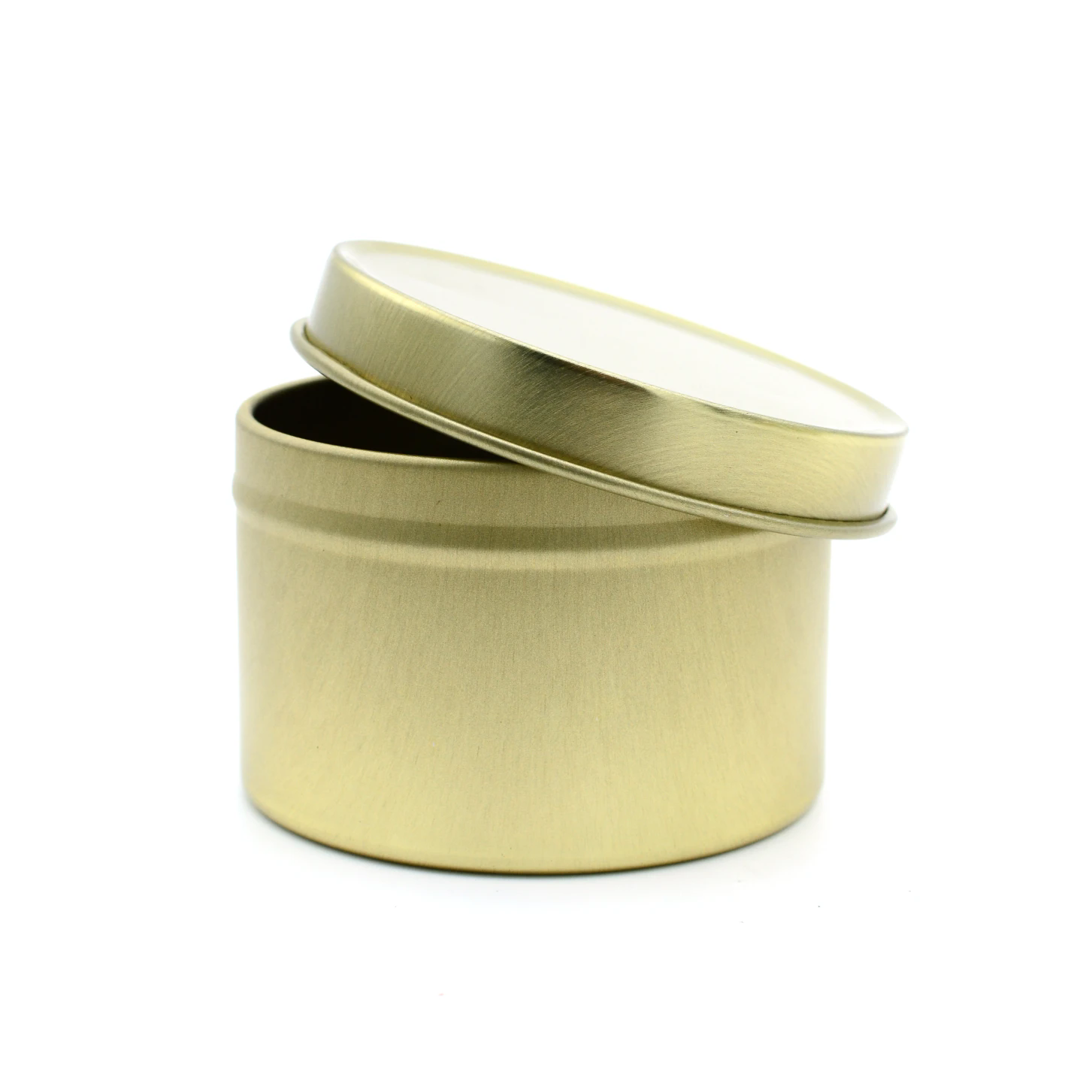
Stock candle tins are existing containers offered in established sizes, shapes, and finishes. Buyers typically add their own labels, sleeves, or outer packaging.
Custom candle tins are manufactured or decorated to an agreed specification. Customization can involve printed artwork, brand colors, embossing, lid design, dimensions, or an entirely new structure.
However, custom packaging does not always require new tooling. An existing tin mold combined with custom printing creates a useful middle option.
| Buying factor | Stock candle tins | Custom candle tins |
|---|---|---|
| Initial investment | Usually lower | May include sampling, setup, or tooling |
| Order flexibility | Often suitable for smaller purchases | Depends on structure and decoration |
| Branding | Usually added after purchase | Can be integrated into the tin |
| Preparation time | Shorter when inventory is available | Includes development and approval |
| Inventory exposure | Easier to purchase incrementally | Greater if the order exceeds demand |
| Long-term economics | Strong for testing and variable demand | Potentially stronger for repeatable volume |
These are purchasing patterns, not universal rules. Minimum quantities and lead times must be confirmed for each specification.
Our manufacturing operation covers 10,000 square meters, with more than 50 production machines, over 1,000 tin-box molds, and annual output exceeding 30 million units across our packaging business.
Those figures describe our overall capabilities—not a promise that every mold suits candle production or is immediately available.
Our first recommendation is to check whether an existing structure meets your requirements. A suitable mold may remove the need for new structural tooling while still allowing distinctive decoration.
We support OEM and ODM development across candle tins, candy tin boxes, cookie tin boxes, and premium gift packaging. For candle projects, the priority remains the container's suitability for the actual formulation and intended use.
A lower factory price does not automatically produce a cheaper finished candle.
For a useful comparison, calculate:
Total landed cost = containers + decoration + setup/tooling + freight and duties + inspection + handling + expected losses.
Then divide by the number of usable units, rather than assuming every ordered tin reaches production undamaged.
Stock tins may need labels applied to the lid, body, and base. Those tasks introduce labor, alignment checks, and potential rework.
Custom printing may remove some decoration steps, but not necessarily fragrance identification, batch coding, or required safety information.
Compare the complete workflow for each option. Otherwise, a cheap container can conceal an expensive preparation process.
Custom orders can tie up funds before the candles generate revenue. Storage, financing, and obsolete artwork also affect the result.
A stock tin purchased in smaller batches may be more economical even when its individual purchase price is higher.
The relevant question is not simply, "How much does each tin cost?" It is, "How much cash must we commit to sell this collection successfully?"
The following figures are hypothetical planning assumptions, not our quotation, verified market averages, or promised savings.
Assume two comparable containers meet the same performance requirements:
| Cost component | Stock tin with labels | Custom-printed existing-mold tin |
|---|---|---|
| Container per unit | $0.60 | $0.68 |
| Branding labels per unit | $0.16 | Included in assumed price |
| Decoration labor per unit | $0.08 | $0.02 |
| Freight, inspection, and handling per unit | $0.12 | $0.12 |
| Total variable cost per unit | $0.96 | $0.82 |
| Incremental fixed setup cost | $0 | $700 |
Under these assumptions, custom printing saves $0.14 per unit after setup.
Break-even volume equals $700 divided by $0.14: 5,000 units.
At 2,000 units, stock costs $1,920 versus $2,340 for custom. At 10,000 units, stock costs $9,600 versus $8,900 for custom.
The lesson is not that custom becomes cheaper at a universal order quantity. It is that your own setup charges and variable savings determine the threshold.
This simplified model excludes financing, storage, tax treatment, and unsold inventory. Add those factors before approving a purchase.
If demand is uncertain, buying flexibility has value.
Stock containers let you test fragrances, price points, and sales channels without committing to a large quantity of product-specific packaging.
A modest unit-price saving is rarely attractive if substantial inventory remains unsold.
Available stock avoids some custom development stages, including artwork approval and new tooling where required.
However, confirm physical availability, dispatch timing, transit, and inspection. "Stock product" does not automatically mean "ready for immediate delivery."
One common tin paired with fragrance-specific labels can simplify purchasing.
Instead of holding separate printed inventory for every scent, you share the container across the range. This approach is particularly useful while the product mix is changing.
Repeat orders can spread initial development costs over more units, provided the structure and artwork remain usable.
Before assuming this benefit, confirm who owns the tooling, whether repeat setup fees apply, and how long tooling will be retained.
Direct printing can replace selected labels and their application steps. Embossing or a distinctive finish can also provide brand recognition without adding another packaging component.
Ask the supplier to identify exactly which finishing operations disappear—and which remain.
Custom candle tins may help create a consistent retail presentation or distinguish a gift collection.
But appearance alone does not prove a higher selling price or better conversion rate.
Test the proposition through retailer feedback, customer research, or a controlled launch. Treat potential revenue improvement separately from confirmed manufacturing savings.
For many growing brands, the best comparison is not "completely stock" versus "completely bespoke."
A practical third option combines:
- An existing, suitable tin structure.
- Shared dimensions across several fragrances.
- Brand-level printing on the body or lid.
- Smaller variable labels for fragrance and batch details.
This separates durable brand assets from information that changes frequently.
It can also reduce the risk of obsolete printed inventory when a fragrance is discontinued.
At Dongguan Color Can Making Technology Co., Ltd., checking existing mold options is therefore an important starting point—not an afterthought once a bespoke design has become expensive.
Food-contact suitability does not establish candle-burning safety.
A tin must be evaluated with the intended wax, fragrance load, wick, fill level, and burning instructions. Changing the container's dimensions or construction can change how the finished candle behaves.
Before committing to bulk production, agree on a documented evaluation plan covering:
1. Container dimensions, seams, and lid fit.
2. Compatibility with the intended formulation.
3. Leakage and coating condition.
4. Burning behavior throughout the candle's usable life.
5. Surface heating, stability, and foreseeable handling.
6. Labels and instructions appropriate to the destination market.
Use a qualified laboratory where needed. ASTM F2417 addresses candle fire safety, while ASTM F2058 addresses fire-safety labeling. ASTM F2179 concerns specified glass candle containers; it should not be presented as a metal-tin certification.
Our company information describes food-grade tinplate, SGS and CTT testing, ISO certification, Sedex auditing, patents, and FDA-related compliance documentation.
Buyers should request the actual documents and check their scope, date, product identification, and intended use.
A laboratory name is not a blanket approval. Likewise, food-contact documentation should not be described as universal "FDA certification" of every finished tin or its suitability for candle burning.
Send the same specification to every shortlisted manufacturer. Include:
- Internal dimensions, target fill weight, and headspace.
- Material, thickness, construction, and coating requirements.
- Lid style and agreed fit.
- Artwork, print coverage, finishes, and embossing.
- Quantity per design and expected reorder volume.
- Sampling, testing, inspection, and acceptance requirements.
- Protective packing, destination, delivery terms, and deadline.
Request separate pricing for stock, custom decoration using an existing mold, and a new bespoke structure.
Also separate tooling, printing setup, samples, packaging, freight, and taxes. Ask whether pricing assumes one artwork or several designs.
Clear specifications make quotations comparable and reduce surprises after the deposit.
Choose stock candle tins when flexibility, a smaller cash commitment, and demand testing matter most.
Consider custom-printed existing-mold tins when your core range is stable and repeated decoration costs are becoming significant.
Reserve fully bespoke structures for projects where a specific functional or brand requirement justifies the added development cost.
Dongguan Color Can Making Technology Co., Ltd. supports OEM and ODM buyers with design, development, production, export coordination, and after-sales service.
Request a side-by-side quotation with your tin dimensions, artwork, order quantity, destination, and launch date. Ask us to identify a suitable existing mold first, then compare its complete cost against stock and fully custom alternatives.
No. They may require more upfront investment, but lower recurring decoration or handling costs can make them cheaper at sufficient volume. Compare total costs using confirmed quotations.
There is no universal minimum. It depends on the manufacturer, structure, printing method, finish, and quantity per artwork. Confirm the requirement for your exact project.
Potentially, yes. An existing structure may support custom printing or other decoration. Printing setup and embossing tools can still involve separate charges.
No. Food-contact suitability and candle performance are different questions. Evaluate the complete candle with its intended formulation, wick, container, and instructions.
Not necessarily. Shared brand printing with fragrance-specific labels can consolidate purchasing and reduce exposure to slow-moving designs.
Standardize suitable structures, simplify unnecessary finishes, compare landed costs, and improve demand planning. Do not remove necessary testing or protective packaging simply to lower the quoted price.
1. Dongguan Color Can Making Technology Co., Ltd. — Company background supplied for this article. Source of the stated experience, factory area, equipment, mold inventory, output, services, and reported compliance credentials. These details were not independently verified; no customer reviews were supplied.
2. U.S. Consumer Product Safety Commission — *Candles Business Guidance*. Official guidance identifying relevant U.S. requirements and voluntary candle standards, including ASTM F2058, F2417, and the glass-specific scope of F2179. [cpsc]
3. U.S. Food and Drug Administration — *Packaging & Food Contact Substances (FCS)*. Official resources on food-contact substances and packaging compliance. [fda]
4. U.S. Food and Drug Administration — *Inventory of Effective Food Contact Substance Notifications*. Explains that reliance on a notification depends on the identified substance, manufacturer or supplier, intended use, and applicable limitations. [hfpappexternal.fda]
5. Intertek — *Candle Safety Testing*. Describes how wax, fragrance, wick, container, accessories, and intended use affect candle evaluation. [intertek]
6. Independent Can — *Candle Tins: Wholesale, Seamless, Custom Packaging*. A supplier example illustrating that stock purchasing requirements and custom-production requirements can differ substantially. Its terms are not presented as industry-wide benchmarks. [independentcan]
7. Cost-model methodology — Original illustrative comparison prepared for this article. All example prices are assumptions; the break-even calculation divides incremental fixed cost by per-unit variable savings. No market-average pricing or customer savings are claimed.


